




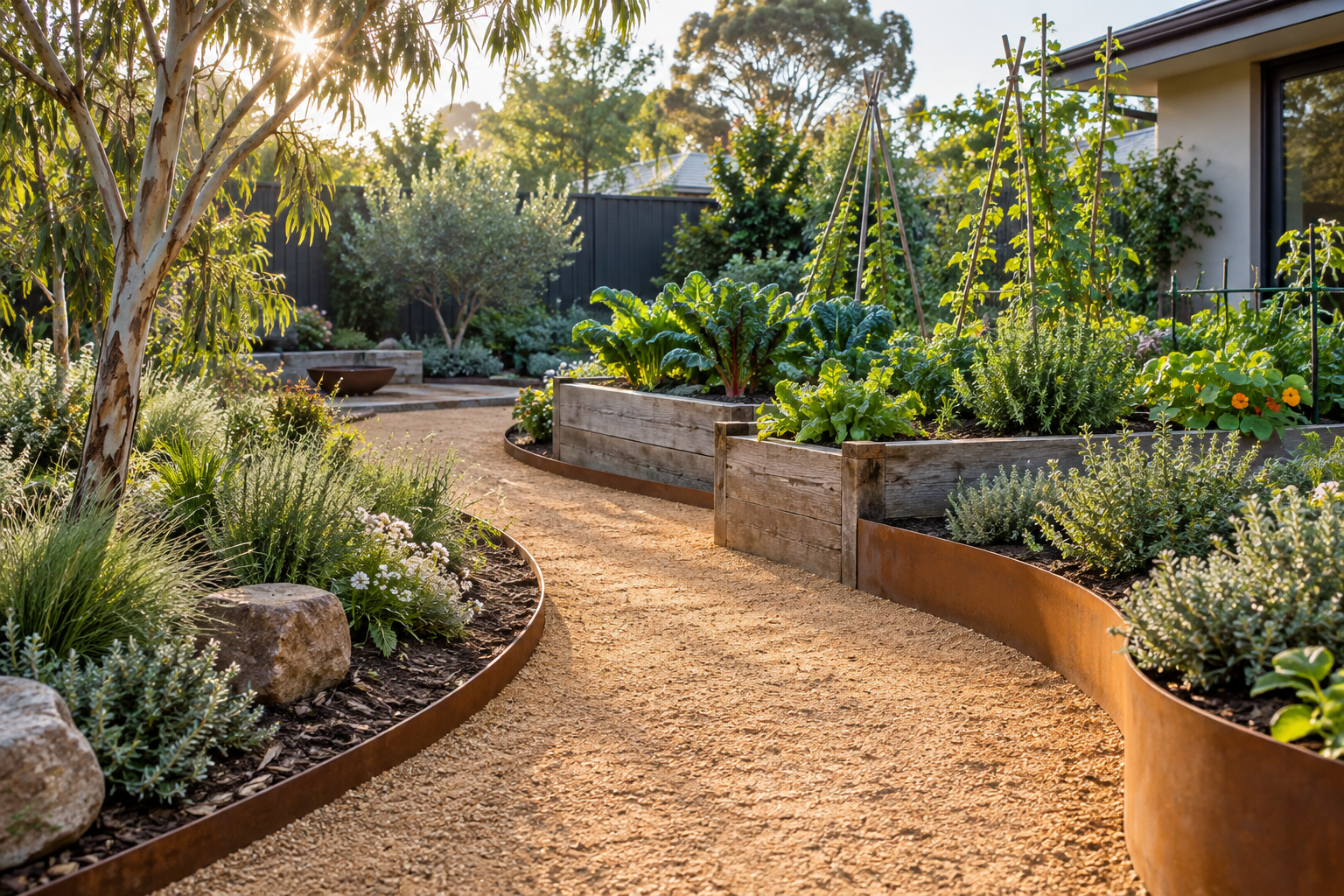
A well-designed outdoor space depends on materials that suit the property, climate and way the garden will be used. For paths and informal driveways, tuscan toppings can create a compact, natural-looking surface that complements many landscape styles. Productive garden beds require a different foundation, with veggie mix soil providing the growing medium needed for many edible plants. Around beds and pathways, weathering steel garden edging can establish clean boundaries while adding a warm, earthy finish to the overall design.
Start With the Purpose of Each Area
Before ordering landscape materials, it helps to divide the garden into functional zones. These might include entertaining areas, vegetable beds, access paths, lawn sections, drainage zones and decorative planting areas.
Each zone places different demands on the materials used within it. A frequently used path must be stable underfoot, while a productive garden bed needs suitable drainage, nutrients and depth. Edging around a lawn has to withstand regular trimming, and borders beside loose aggregates must prevent material from spreading into nearby areas.
Thinking about function first reduces the risk of choosing a product based only on appearance. It can also make installation easier because the depth, quantity and preparation requirements can be planned before work begins.
Build Paths From the Ground Up
A successful garden path relies on more than its visible top layer. The ground underneath must be excavated and prepared correctly so the finished surface remains reasonably level and stable.
Soft soil, weeds and organic matter should generally be removed from the path area. Depending on the site and intended use, a compacted base may then be required. The surface material can be spread over this foundation and compacted to create a firmer finish.
Drainage also deserves attention. A path should not direct water towards the house, shed or another structure. A slight fall can help move rainwater away from buildings and reduce puddling. On sloping blocks, additional drainage measures may be necessary to prevent water from washing loose material downhill.
The width of the path should reflect how it will be used. A narrow route may be adequate for occasional foot traffic, but a wider path is more practical when moving wheelbarrows, bins or garden equipment.
Give Edible Plants a Strong Foundation
Vegetable gardens perform best when the growing medium supports healthy root development. Soil should hold enough moisture for plants to use while still allowing excess water to drain away. If it becomes heavily compacted or waterlogged, roots may struggle to access oxygen.
Gardeners should consider the depth of the bed as well as its surface area. Shallow-rooted herbs and leafy greens may cope with less depth than tomatoes, climbing beans and larger vegetables. Raised beds can provide greater control over soil depth and drainage, particularly where the existing ground is compacted or difficult to cultivate.
Even a quality growing medium will change over time. Organic matter breaks down, nutrients are used by plants, and the soil level may gradually settle. Adding compost and suitable amendments between growing seasons can help maintain structure and fertility.
Mulch is another useful addition. It can slow moisture loss, moderate temperature changes and reduce weed growth. However, it should be kept clear of plant stems to avoid creating persistently damp conditions around them.
Use Edging to Control the Layout
Edging creates a defined transition between different surfaces. It can separate lawn from garden beds, keep gravel away from planted areas and reinforce the shape of curved or straight pathways.
The best edging layout usually follows the practical needs of the garden rather than creating unnecessary complexity. Gentle curves are easier to maintain than tight bends, while straight lines can give contemporary spaces a structured appearance.
Installation depth is important. If edging sits too high, it may become a trip hazard or interfere with mowing. If it is installed too low, soil, mulch or aggregates may spill across it. The correct height depends on the adjoining surfaces and the amount of material being retained.
Metal develops character as it is exposed to outdoor conditions. Its warm colour can work particularly well alongside stone, timber, native plants and textured foliage. It can also provide visual contrast in gardens dominated by green planting.
Calculate Quantities Before Ordering
Landscape products are often sold by volume rather than by area. To estimate the quantity required, the length and width of the space should be multiplied by the planned material depth. All measurements must use the same unit before the calculation is completed.
It is sensible to allow a small amount for compaction, settlement and minor variations in ground level. Ordering too little can interrupt the project and may result in slight colour differences between separate deliveries.
Access should also be checked before placing an order. Garden gates, narrow driveways, overhead branches and parked vehicles can affect where materials are delivered. Choosing a suitable drop-off point can significantly reduce the time spent moving heavy products around the property.
Create a Garden That Works as a Whole
Paths, growing areas and borders should feel like parts of one connected landscape. Repeating colours or textures can help bring the design together, while clear boundaries make different zones easier to use and maintain.
Careful preparation is just as important as product selection. A stable foundation, appropriate growing conditions and accurately installed borders will give the finished garden a more polished appearance. More importantly, these choices can help the outdoor space remain practical through regular use and changing weather.